Introducing Rodeo
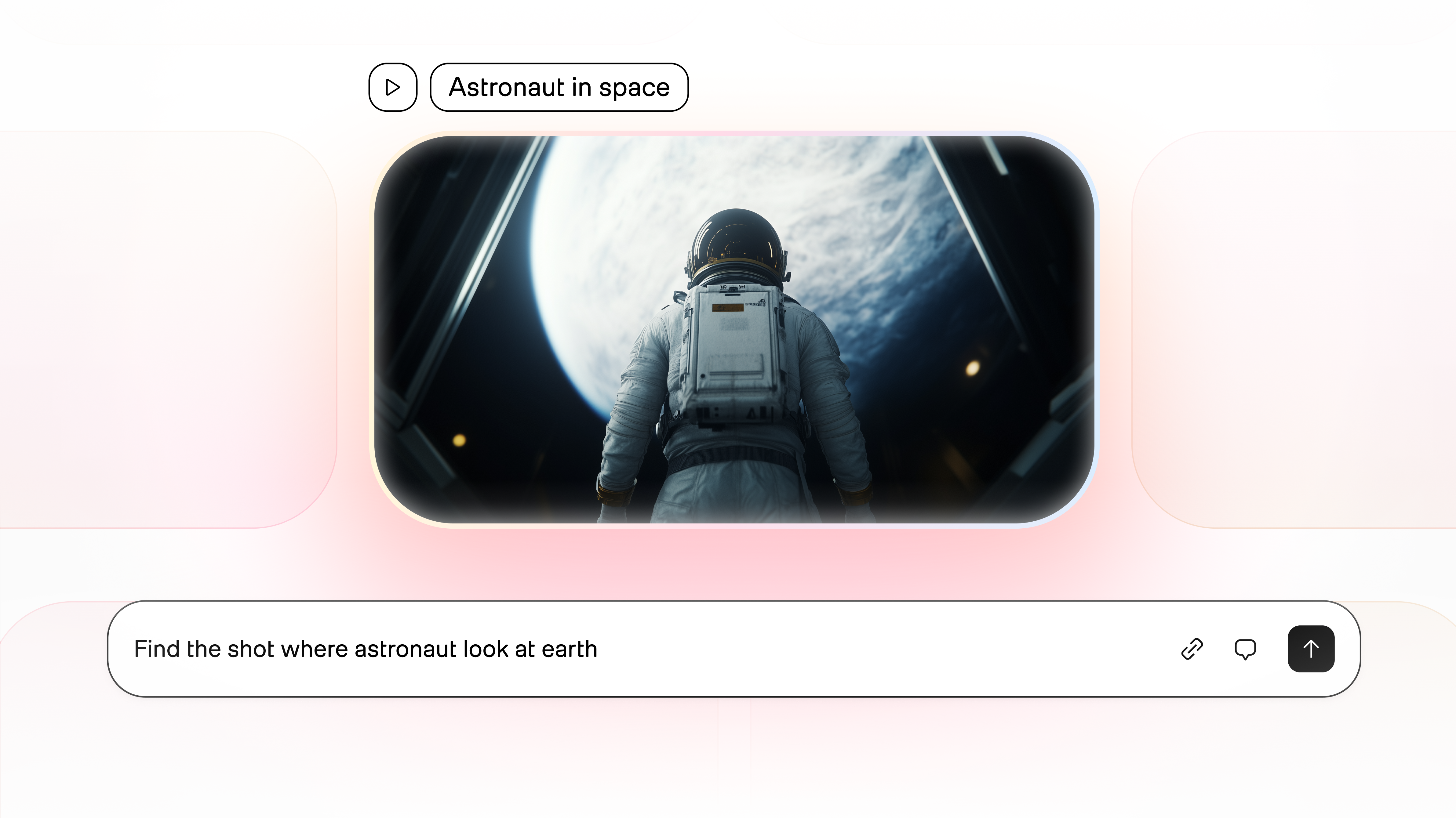
Enter a new way of thinking with video. Upload your library, describe what you want to make, and Rodeo watches everything — finding the moments that serve your narrative and composing them into a rough cut.
Your footage, finally usable
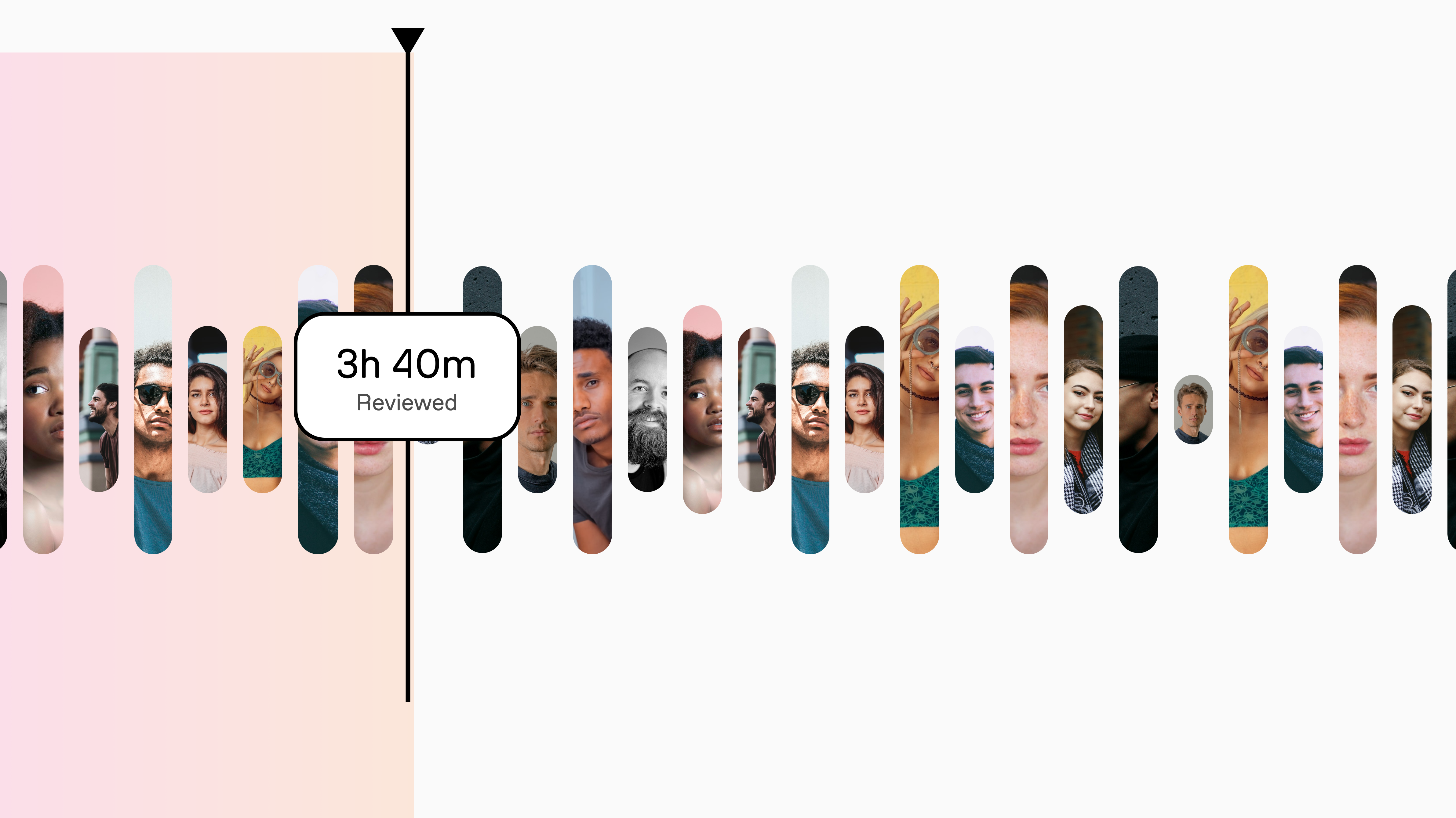
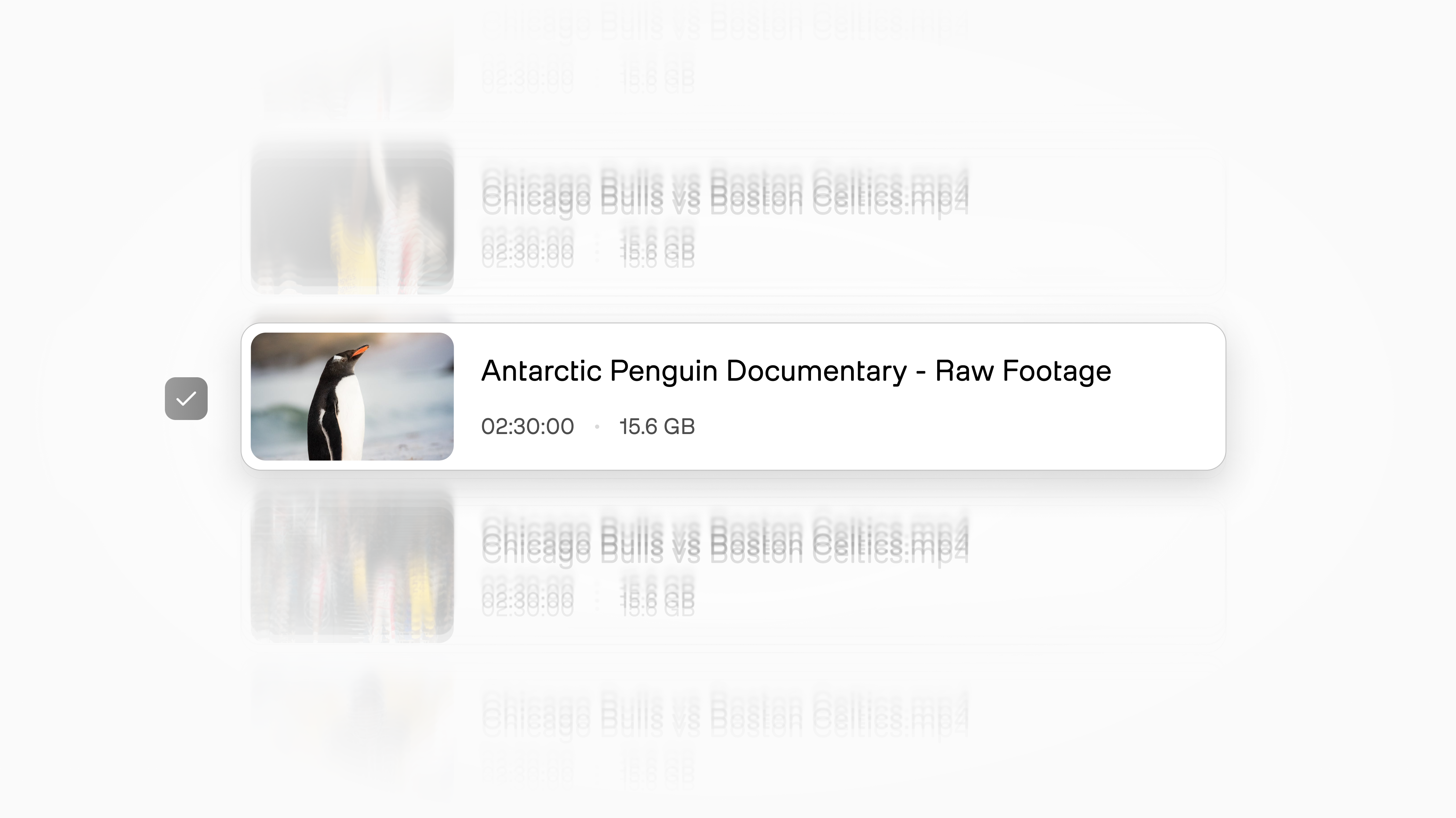
Most video libraries are invisible. Not because the footage doesn't exist, but because there's too much. Finding anything requires a human to watch it first in full. A documentary crew shoots 200 hours for a feature. A brand spends millions producing content that gets used once. A sports league has 50,000 hours of game tape and a keyword search box. Finding the right clip in that library isn't a search problem — it's a comprehension problem.
Rodeo changes the math. Built on TwelveLabs' powerful video foundation models, Rodeo enables you to actually get usable information out of your footage. Not extracting metadata. Not running object detection on frames. Actually watching: understanding people, settings, emotional arcs, recurring themes, standout moments.
Instead of manually scrubbing to find clips in video, you describe what you're looking for. Then you can make the video.
From brief to rough cut: how Rodeo creates footage automatically
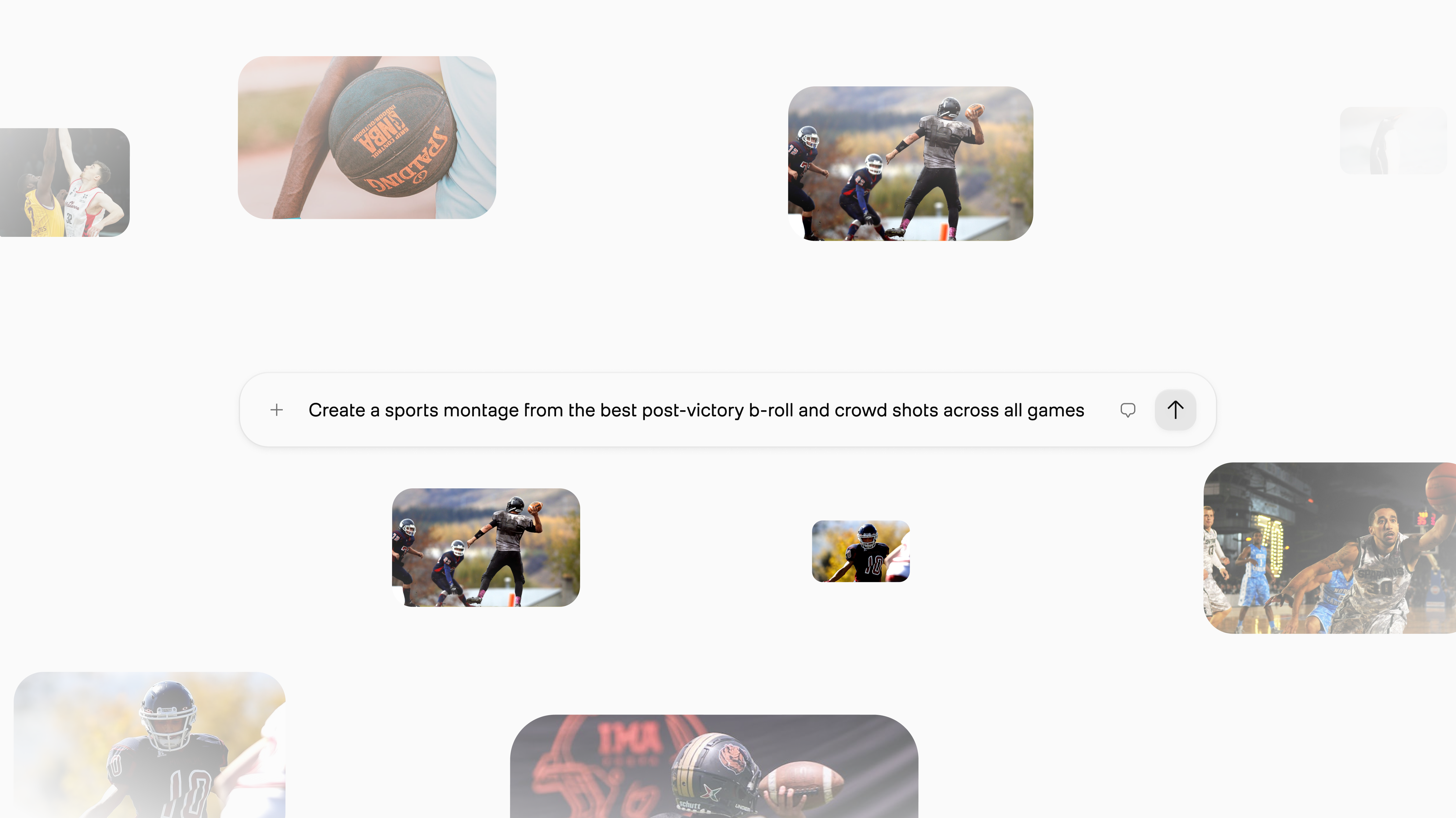
Describe what you want to make: "A highlight reel of defensive plays from the second half." "A trailer that captures the emotional arc of the season." "A customer story from these three interviews, lead with the outcome."
Rodeo's AI creative engine takes that brief and creates a rough cut. Rodeo reasons about which clip belongs where and why. For structured work, go scene by scene: define each scene with a duration target, a mood, and which bins to draw from. Rodeo creates each scene independently, then reasons about the whole.
From raw footage to rough cut in minutes.
How Rodeo's video editing canvas works: ranked clip suggestions, not search
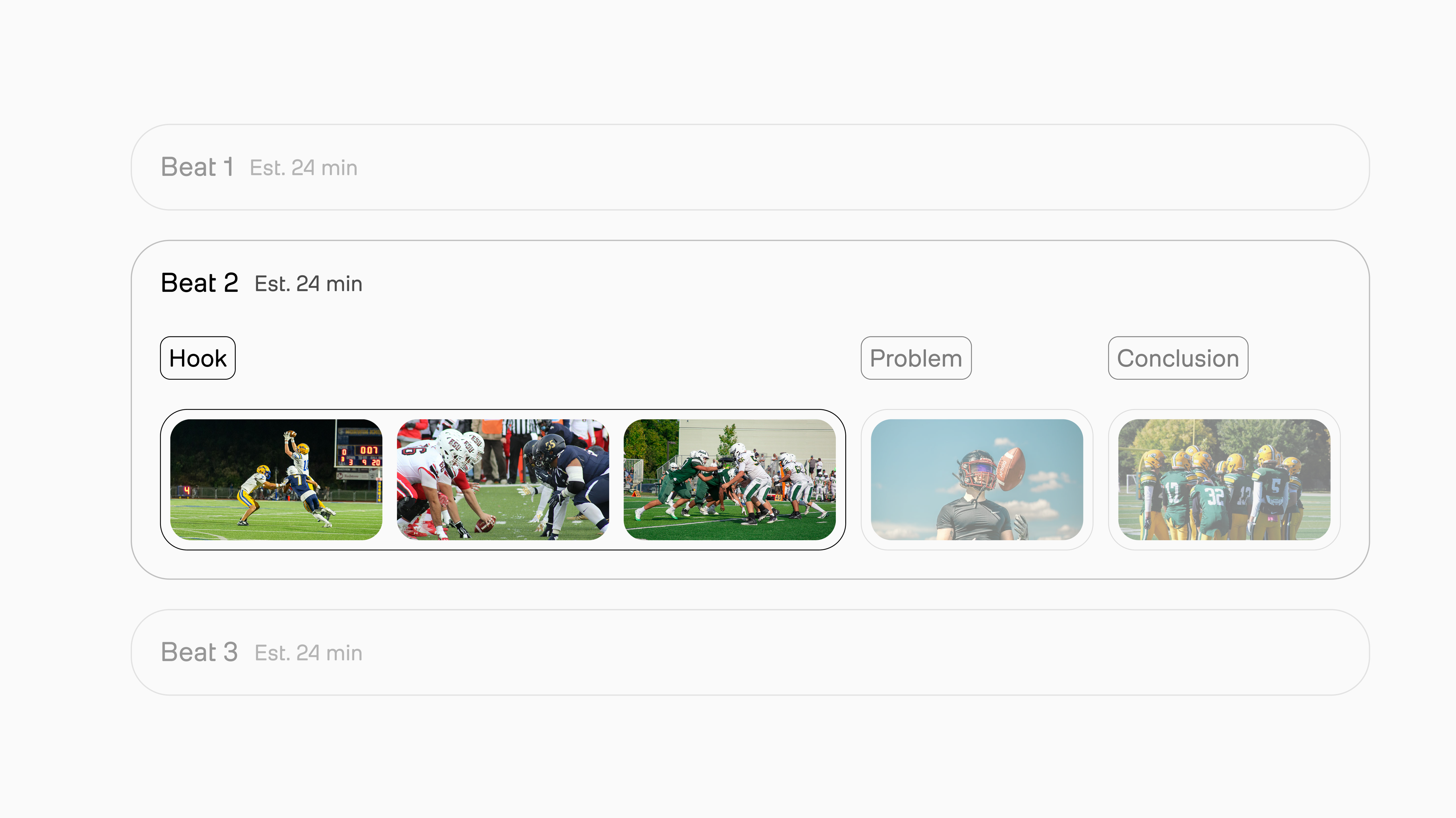
The creation lands in a visual canvas. Drag, trim, reorder. But the part that changes how editing feels: every clip selected comes with ranked alternatives — other moments from your library that could fill the same narrative role.
Don't love the opening? Click through three options that serve the same structural purpose. Editing becomes a curated choice between strong options rather than a search through everything you have.
Who it's built for: video producers, brand teams, and creators
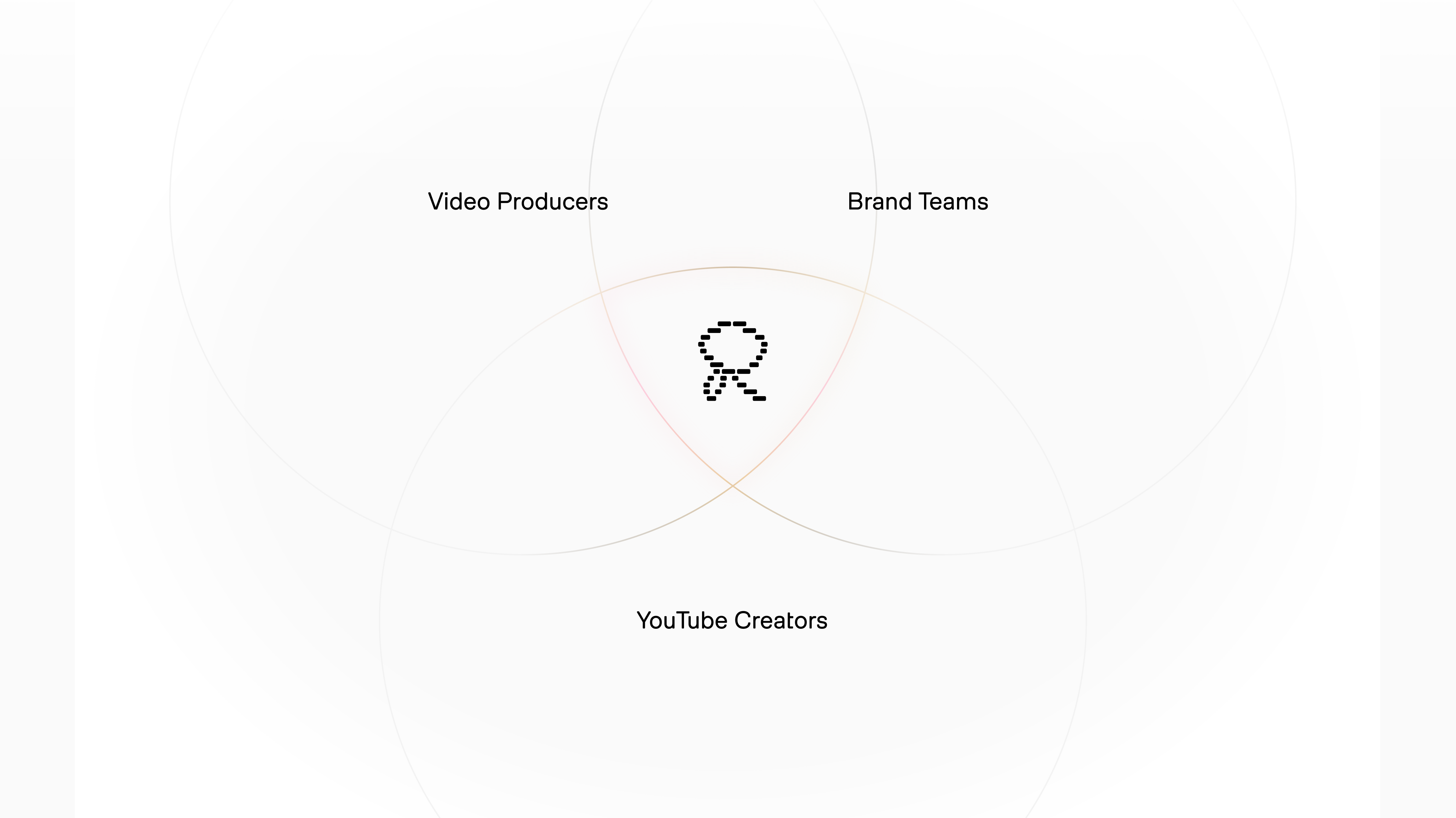
The agency content producer who manages video across a dozen clients. Every deliverable — quarterly recap, testimonial reel, brand sizzle — is a composition problem: pull from multiple sources, find the right moments, create something narratively coherent that matches brand voice. Before Rodeo, that's days of scrubbing Dropbox folders and logging timecodes. Now: upload video, write a scene-level brief, have a rough cut in minutes. Client says "more product shots, less CEO talking" — conversational refinement handles the revision without starting over. Export as EDL, hand to an editor for finishing.
The brand content team lead sitting on years of footage they've already paid for — webinars, demos, customer interviews, event recordings — mostly unwatched after initial use. "Build a customer story from these three interviews." "Create a product evolution video from demos over the past two years." "Make a culture video from our last four all-hands." Marengo search makes the archive visible for the first time: find "customer testimonials where someone mentions reliability" without relying on whoever named the files. The corpus becomes a strategic asset.
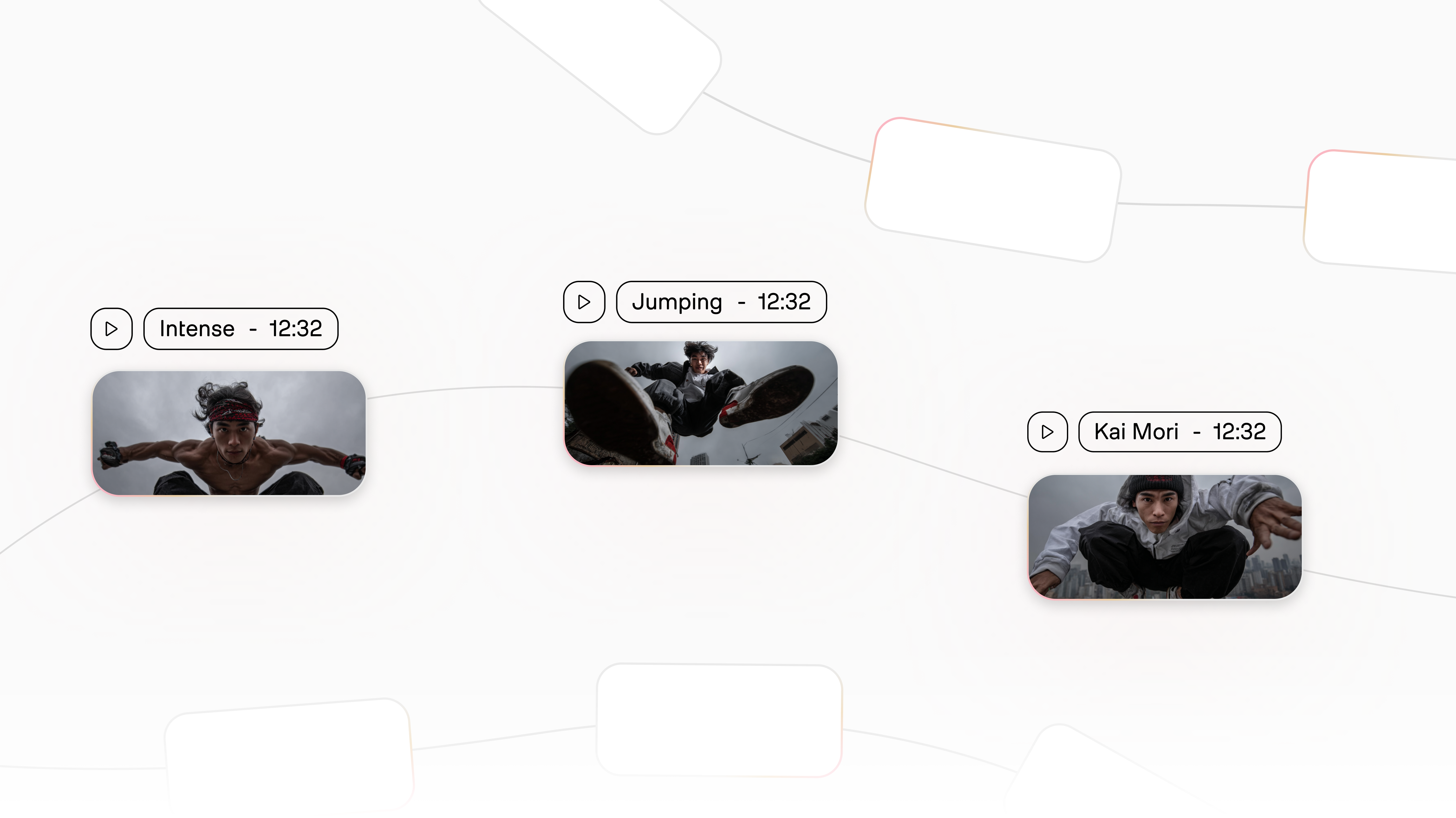
The YouTube narrative creator making video essays, compilations, retrospectives, documentary-style content. 60–80% of production time is finding and creating clips. "Find every time Walter White lies in Breaking Bad." "Find establishing shots that feel lonely." "Find moments of tension between these two characters." These are semantic queries — Marengo returns results based on what's happening in the video, not what's in a metadata field. Upload the source corpus, search semantically, build a scene-level brief, generate a creation, iterate conversationally. That's a production workflow that didn't exist before.
The through-line: footage spread across multiple sources, editorial intent you can articulate, and a recurring need to compose it into something new. Multi-source composition with narrative intent is what Rodeo is built for — and what no existing tool does.
Why we built video foundation models
Rodeo required building models that understand video natively — not decomposing it into transcript + frames + audio and recombining results, but comprehending the unified stream the way a human viewer does.
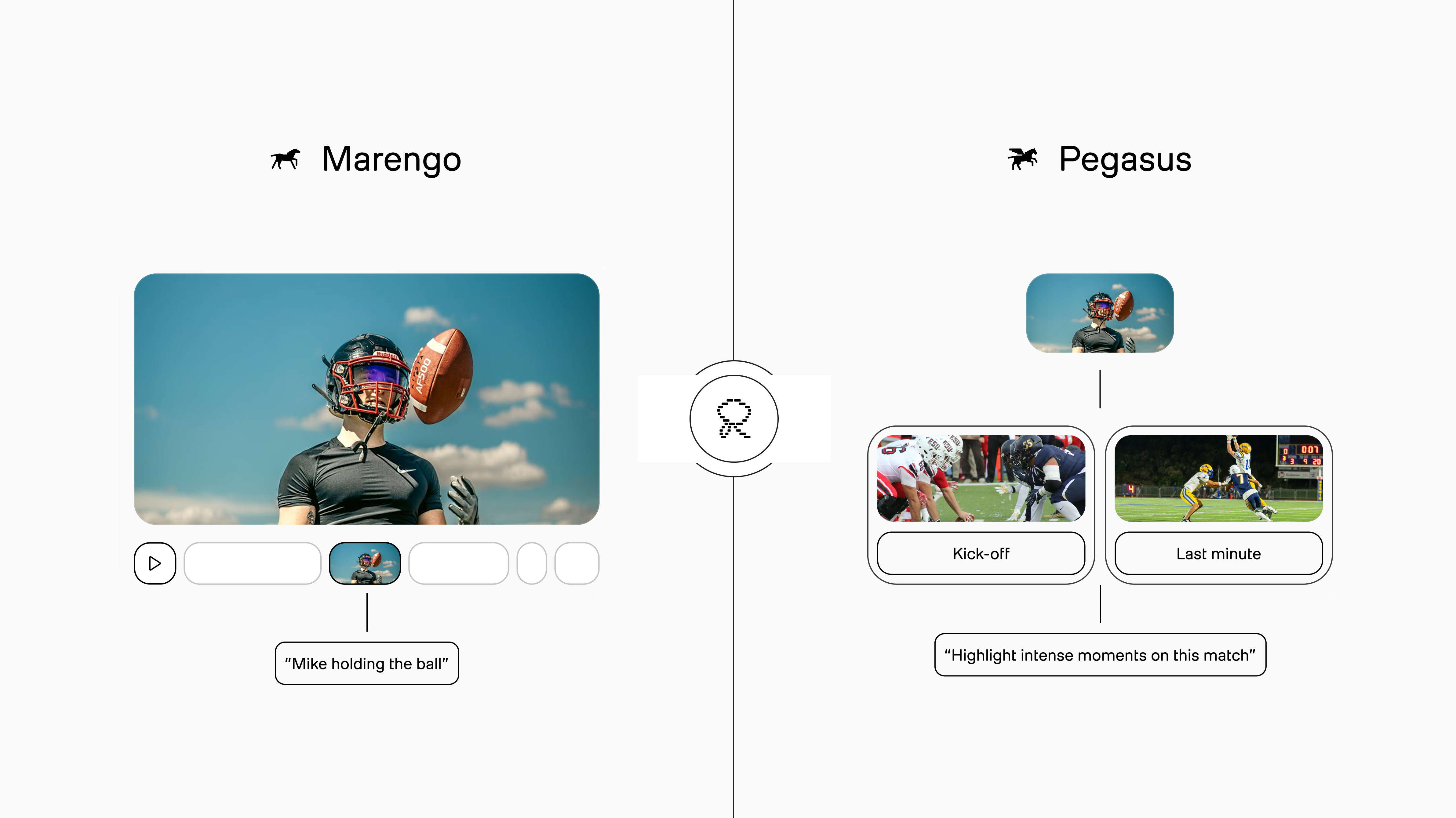
Marengo encodes video into multimodal embeddings that capture what's happening across visual, auditory, and temporal channels simultaneously. When you search for "coach giving an emotional halftime speech," Marengo returns results that satisfy that description semantically — not because someone typed those words in a tag.
Pegasus reasons about video content: what's happening, why it matters, how elements relate across time. It's what generates the corpus summary when you upload your library, and what understands narrative dynamics well enough to surface thematic through-lines you didn't know were there.
Rodeo uses agentic orchestration to create rough cuts using both models: Marengo to match intent against content, Pegasus to reason about editorial structure. The result is a rough cut with logic, not a collage.
TwelveLabs has been building these video intelligence platform models since 2021. Rodeo is the first product that puts the full stack in front of creative professionals as an integrated workflow.
The shift
Video has always been rich with stories that couldn't be found. Not because the footage wasn't there, but because comprehension was the bottleneck. Every hour of footage required an hour of human attention before any of it became usable.
That constraint is gone. When you can search thousands of hours for "moments of hope emerging from despair," the question stops being whether you can find the clip. It becomes what you want to say.
Rodeo is how you say it.
Introducing Rodeo
Enter a new way of thinking with video. Upload your library, describe what you want to make, and Rodeo watches everything — finding the moments that serve your narrative and composing them into a rough cut.
Your footage, finally usable
Most video libraries are invisible. Not because the footage doesn't exist, but because there's too much. Finding anything requires a human to watch it first in full. A documentary crew shoots 200 hours for a feature. A brand spends millions producing content that gets used once. A sports league has 50,000 hours of game tape and a keyword search box. Finding the right clip in that library isn't a search problem — it's a comprehension problem.
Rodeo changes the math. Built on TwelveLabs' powerful video foundation models, Rodeo enables you to actually get usable information out of your footage. Not extracting metadata. Not running object detection on frames. Actually watching: understanding people, settings, emotional arcs, recurring themes, standout moments.
Instead of manually scrubbing to find clips in video, you describe what you're looking for. Then you can make the video.
From brief to rough cut: how Rodeo creates footage automatically
Describe what you want to make: "A highlight reel of defensive plays from the second half." "A trailer that captures the emotional arc of the season." "A customer story from these three interviews, lead with the outcome."
Rodeo's AI creative engine takes that brief and creates a rough cut. Rodeo reasons about which clip belongs where and why. For structured work, go scene by scene: define each scene with a duration target, a mood, and which bins to draw from. Rodeo creates each scene independently, then reasons about the whole.
From raw footage to rough cut in minutes.
How Rodeo's video editing canvas works: ranked clip suggestions, not search
The creation lands in a visual canvas. Drag, trim, reorder. But the part that changes how editing feels: every clip selected comes with ranked alternatives — other moments from your library that could fill the same narrative role.
Don't love the opening? Click through three options that serve the same structural purpose. Editing becomes a curated choice between strong options rather than a search through everything you have.
Who it's built for: video producers, brand teams, and creators
The agency content producer who manages video across a dozen clients. Every deliverable — quarterly recap, testimonial reel, brand sizzle — is a composition problem: pull from multiple sources, find the right moments, create something narratively coherent that matches brand voice. Before Rodeo, that's days of scrubbing Dropbox folders and logging timecodes. Now: upload video, write a scene-level brief, have a rough cut in minutes. Client says "more product shots, less CEO talking" — conversational refinement handles the revision without starting over. Export as EDL, hand to an editor for finishing.
The brand content team lead sitting on years of footage they've already paid for — webinars, demos, customer interviews, event recordings — mostly unwatched after initial use. "Build a customer story from these three interviews." "Create a product evolution video from demos over the past two years." "Make a culture video from our last four all-hands." Marengo search makes the archive visible for the first time: find "customer testimonials where someone mentions reliability" without relying on whoever named the files. The corpus becomes a strategic asset.
The YouTube narrative creator making video essays, compilations, retrospectives, documentary-style content. 60–80% of production time is finding and creating clips. "Find every time Walter White lies in Breaking Bad." "Find establishing shots that feel lonely." "Find moments of tension between these two characters." These are semantic queries — Marengo returns results based on what's happening in the video, not what's in a metadata field. Upload the source corpus, search semantically, build a scene-level brief, generate a creation, iterate conversationally. That's a production workflow that didn't exist before.
The through-line: footage spread across multiple sources, editorial intent you can articulate, and a recurring need to compose it into something new. Multi-source composition with narrative intent is what Rodeo is built for — and what no existing tool does.
Why we built video foundation models
Rodeo required building models that understand video natively — not decomposing it into transcript + frames + audio and recombining results, but comprehending the unified stream the way a human viewer does.
Marengo encodes video into multimodal embeddings that capture what's happening across visual, auditory, and temporal channels simultaneously. When you search for "coach giving an emotional halftime speech," Marengo returns results that satisfy that description semantically — not because someone typed those words in a tag.
Pegasus reasons about video content: what's happening, why it matters, how elements relate across time. It's what generates the corpus summary when you upload your library, and what understands narrative dynamics well enough to surface thematic through-lines you didn't know were there.
Rodeo uses agentic orchestration to create rough cuts using both models: Marengo to match intent against content, Pegasus to reason about editorial structure. The result is a rough cut with logic, not a collage.
TwelveLabs has been building these video intelligence platform models since 2021. Rodeo is the first product that puts the full stack in front of creative professionals as an integrated workflow.
The shift
Video has always been rich with stories that couldn't be found. Not because the footage wasn't there, but because comprehension was the bottleneck. Every hour of footage required an hour of human attention before any of it became usable.
That constraint is gone. When you can search thousands of hours for "moments of hope emerging from despair," the question stops being whether you can find the clip. It becomes what you want to say.
Rodeo is how you say it.