The second bet
There are two bets being made in AI video right now.
The first is generation. Models that conjure footage from a text prompt: a hospital corridor, a galloping horse, an unnamed CEO smiling at an unnamed camera. The press cycle has been about this side for two years, and the capital has been on this side for longer. The implicit promise is that you no longer need to shoot anything; you can describe it instead.
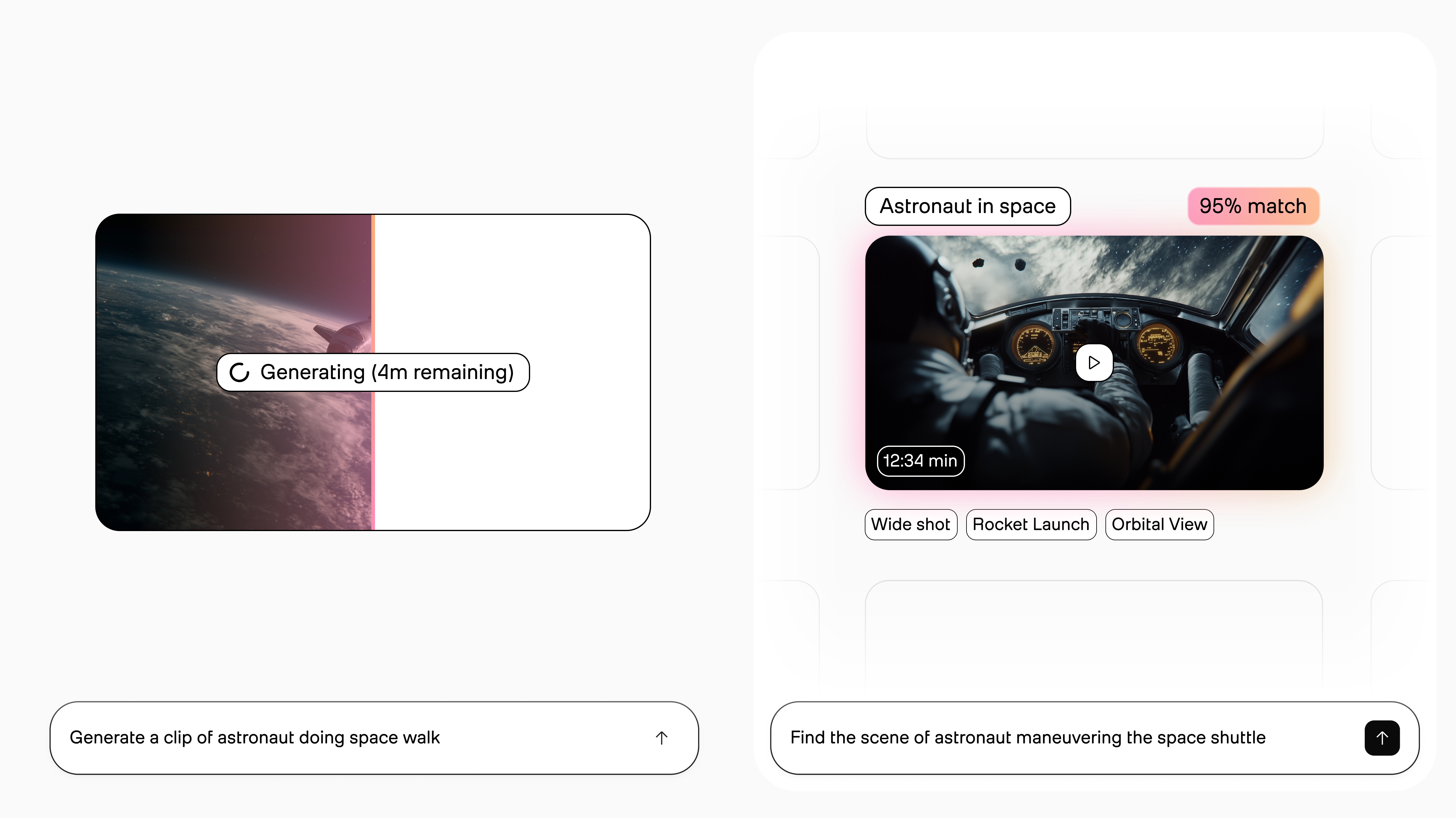
The second is comprehension. Models that read the footage you already have — the interviews you sat through, the b-roll you carried back from a three-month shoot, the unedited concert tape, the family camcorder pulls from 2007. These models don't make anything new. They make the thing you already shot findable, composable, and finally usable.
Almost everyone who has ever pressed record on something they cared about is on the second bet. They just didn't know there was a second bet.
Today, Rodeo is generally available. Built on TwelveLabs' multimodal video understanding model, Rodeo is the video intelligence platform for storytellers who need to work with what they shot, not synthesize what they didn't.
Generation can't tell your story
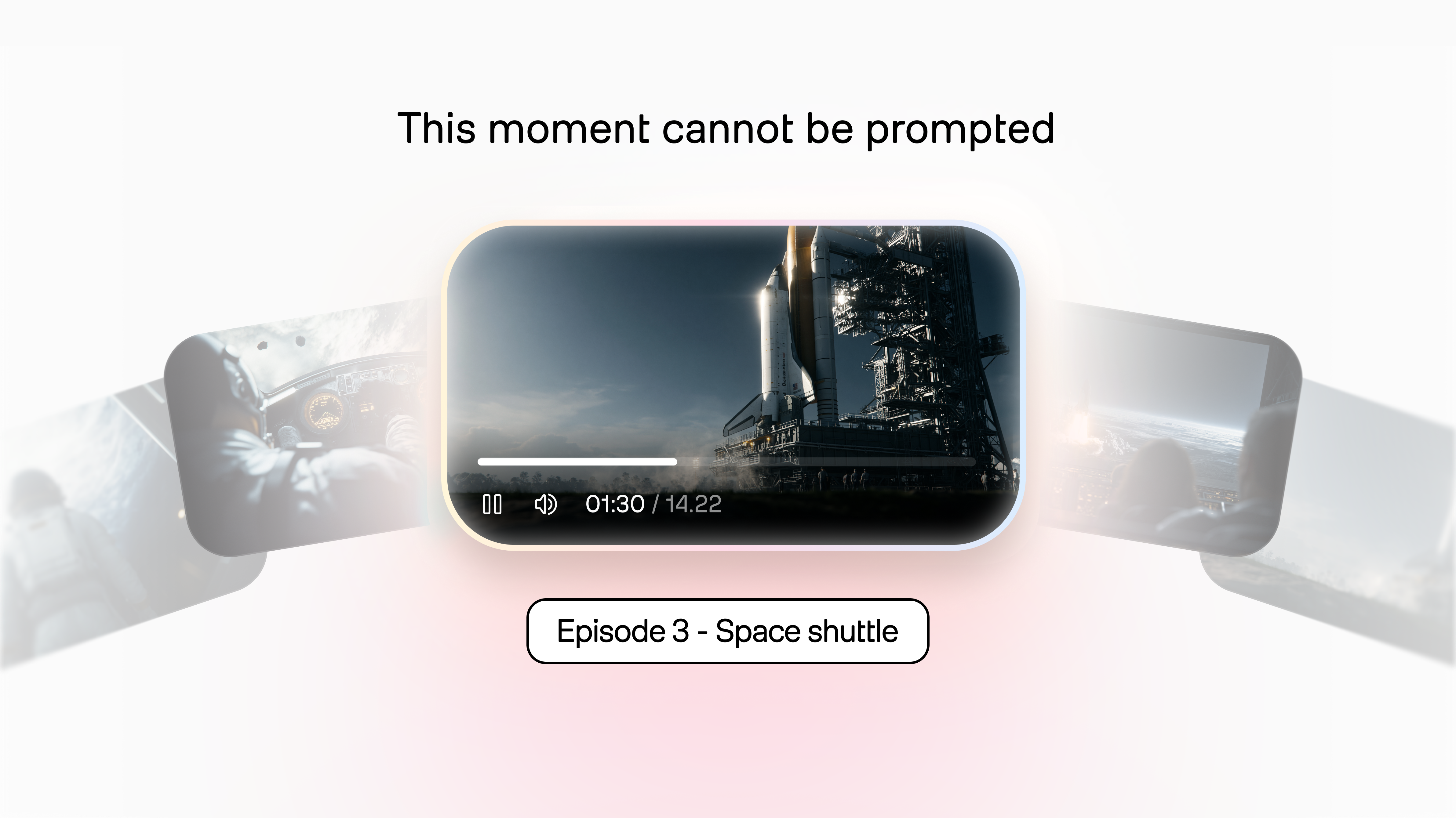
A generative model can render a hospital corridor. It cannot render *the* corridor your protagonist actually walked down in episode three. It can produce a perfectly plausible CEO mid-speech. It cannot produce the customer who actually said the thing that made your documentary work.
This sounds obvious when you say it directly. It is somehow not obvious in the way most of the field has been pitched. The default assumption inside the generation conversation is that the source-material problem is solved — that fidelity will keep improving and eventually it won't matter where the footage came from. That assumption is wrong about what makes video resonate, and it has been wrong since the first uncanny-valley flop in cinema. The uncanny valley isn't a visual problem. It's an ontological one. Audiences can feel when something didn't happen.
This is why a shaky iPhone clip of your kid's first steps is worth rewatching a hundred times and a perfectly rendered three-second AI clip of "a child taking first steps" isn't worth watching once. Production value is not the variable. Reality is the variable. A documentary made from generated footage is not a documentary. A brand story narrated by a synthesized customer is not a customer story. A video essay created from fabricated film clips is, by definition, about nothing.
The serious storytellers, such as the documentarians, the video essayists, the narrative filmmakers, and the brand-of-one creators whose footage is the product, have known this from the start. They have mostly watched the generation conversation from the sidelines, waiting for it to turn into something they could actually use, and quietly suspected it never would.
The hard drive is the moat
The unedited footage on your drives is the most defensible asset you have.
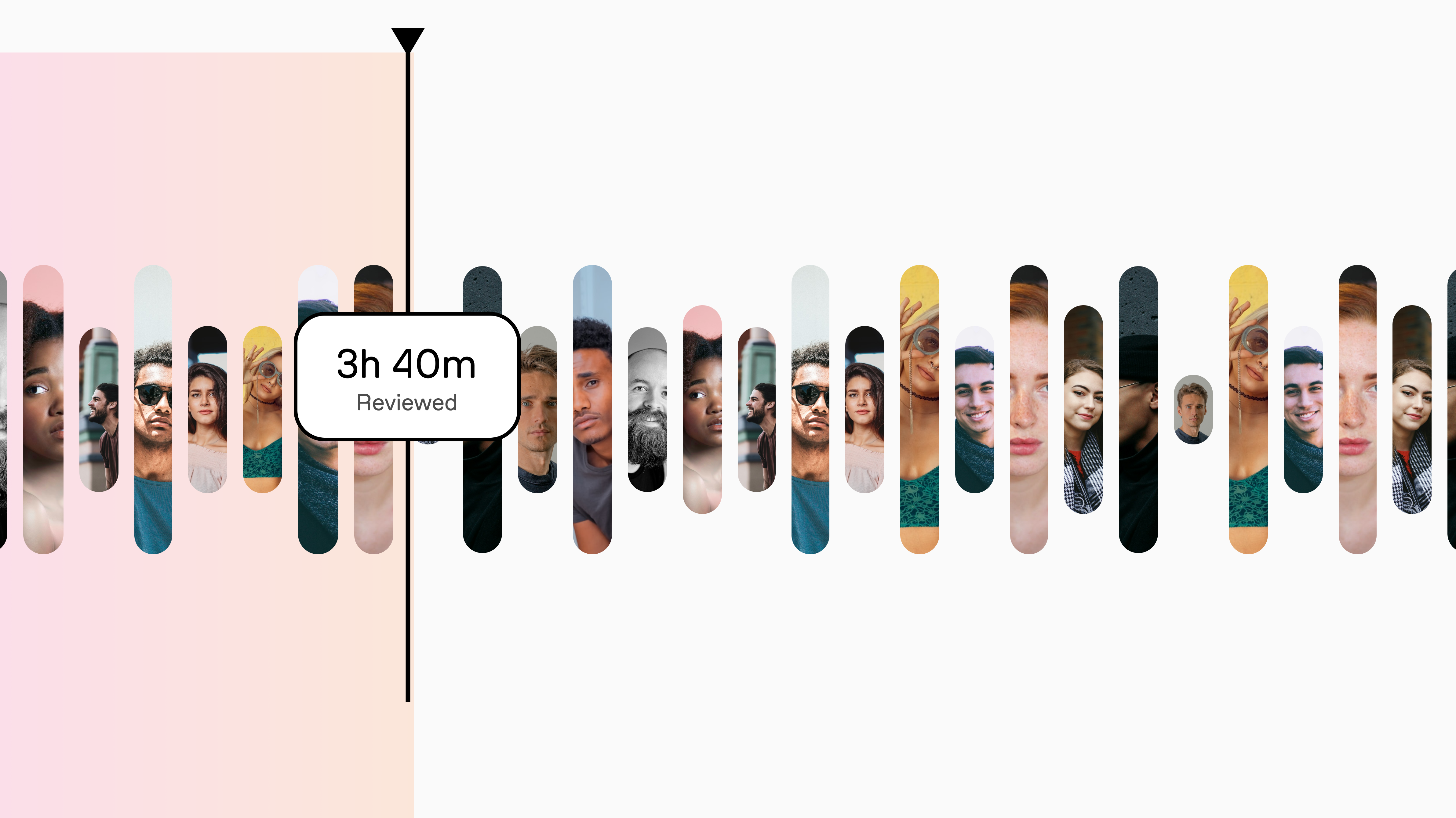
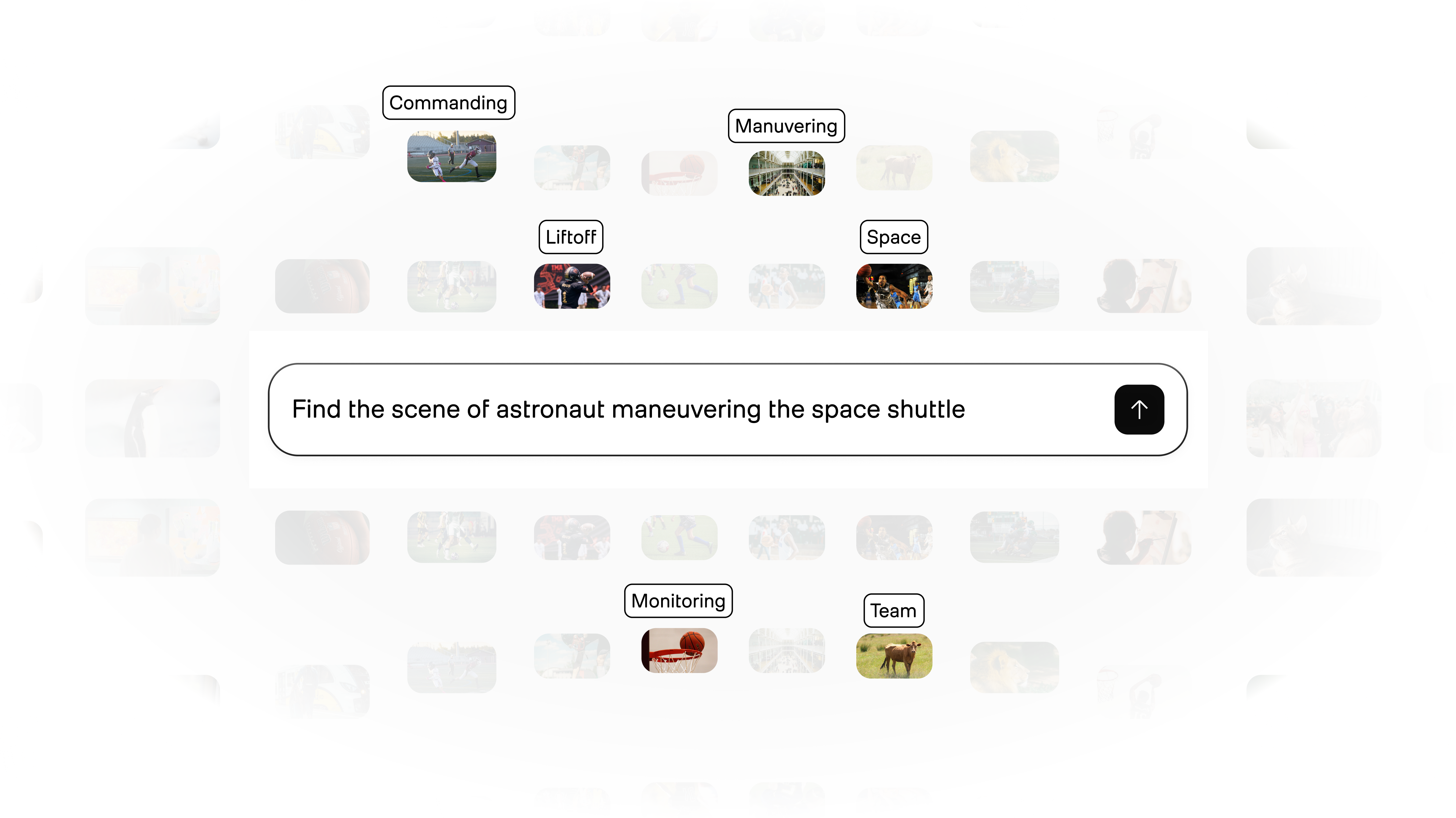
Think about what is actually on a working filmmaker's ten-terabyte external. 3 years of original interviews. 8 projects' worth of b-roll. Several hundred hours of material from a series that ran 2 seasons and could run a third. Camera tests, behind-the-scenes, alternate takes, abandoned cuts, location captures from cities you visited once. Some of it is documented, most of it isn't. Video metadata automation changes that: instead of relying on what you remembered to log, Rodeo indexes by what is actually in the frame, making the entire archive queryable from day one. None of it can be reproduced by anyone, because none of it is in any model's training set, and none of it can be summoned by a prompt. It is yours, specifically and irreducibly, because you went somewhere with a camera and pressed record.
A generative model gives every prompter on Earth the same hospital corridor. Your hard drive gives you one that exists nowhere else — the specific corridor you saw. As rendered footage becomes a commodity, original footage is what retains scarcity and specificity. The hard drive is the moat. Most creators don't think of it that way because they can't see inside it. The footage is the asset; retrieval is the bottleneck. The question of how to find clips in video without scrubbing every file manually is the constraint that determines whether the footage on your drives ever becomes anything.
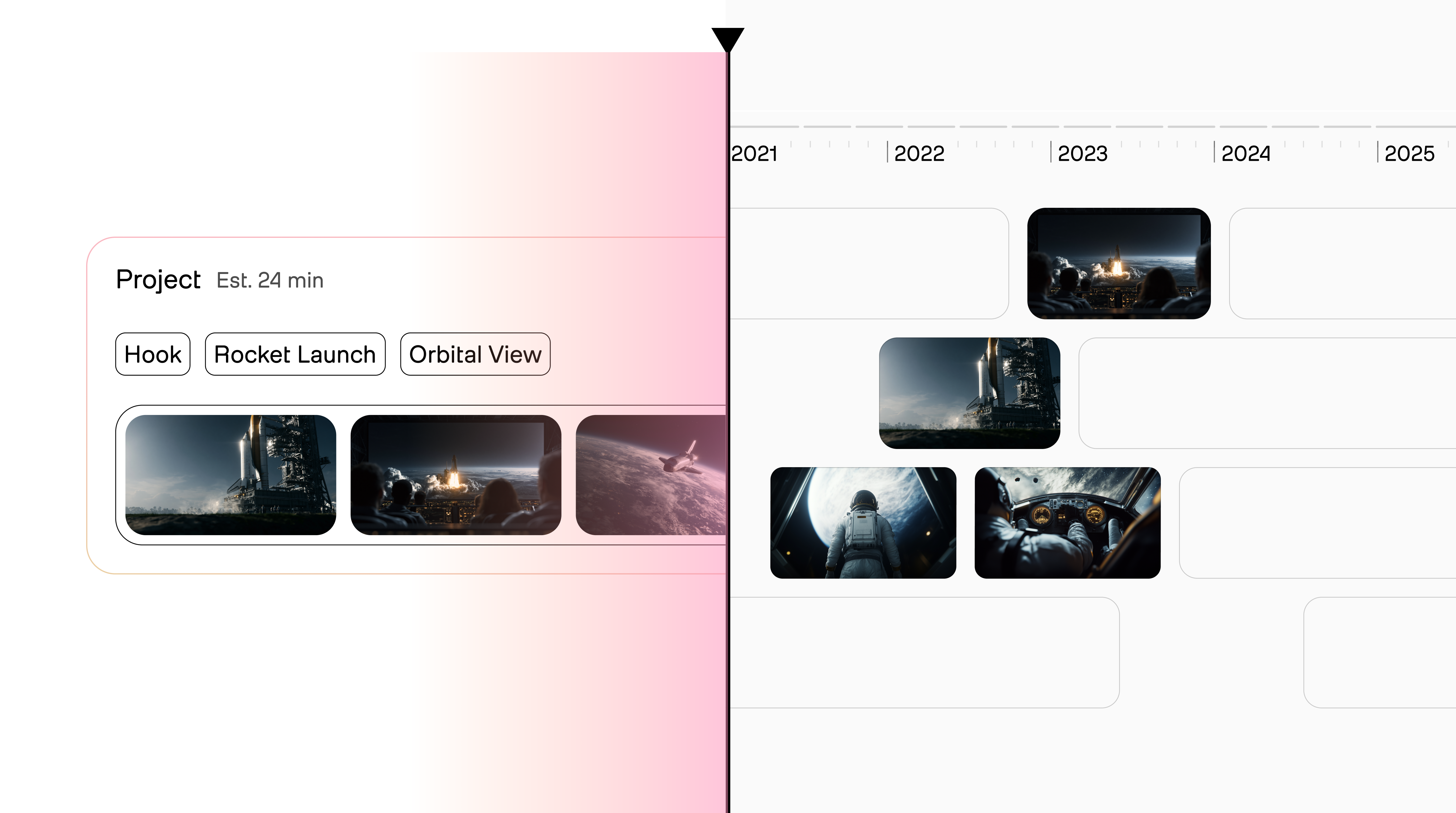
What changes when the retrieval problem goes away is concrete, not abstract. A video essayist sitting on 60 hours of source material across 20 episodes of a show can use AI video search to find "every moment where the main character lies and immediately looks away" and get the clips ranked, without ever having watched the show. A documentary editor with 3 hours of interviews per subject can ask for "moments where the interviewee contradicts themselves about money" and have a stringout in minutes. For production companies and post houses, AI video analysis scales the same capability across every client library — not just one filmmaker's archive. A solo creator with 3 years of YouTube footage can rebuild a campaign from material they already shot, in a single afternoon, on a brief written that morning. None of this existed in any form a year ago. All of it is the unfair advantage of having original material that can finally be read.
Comprehension, not conjuring
It is worth being clean about what Rodeo is and isn't, because the AI video field has confused this badly.
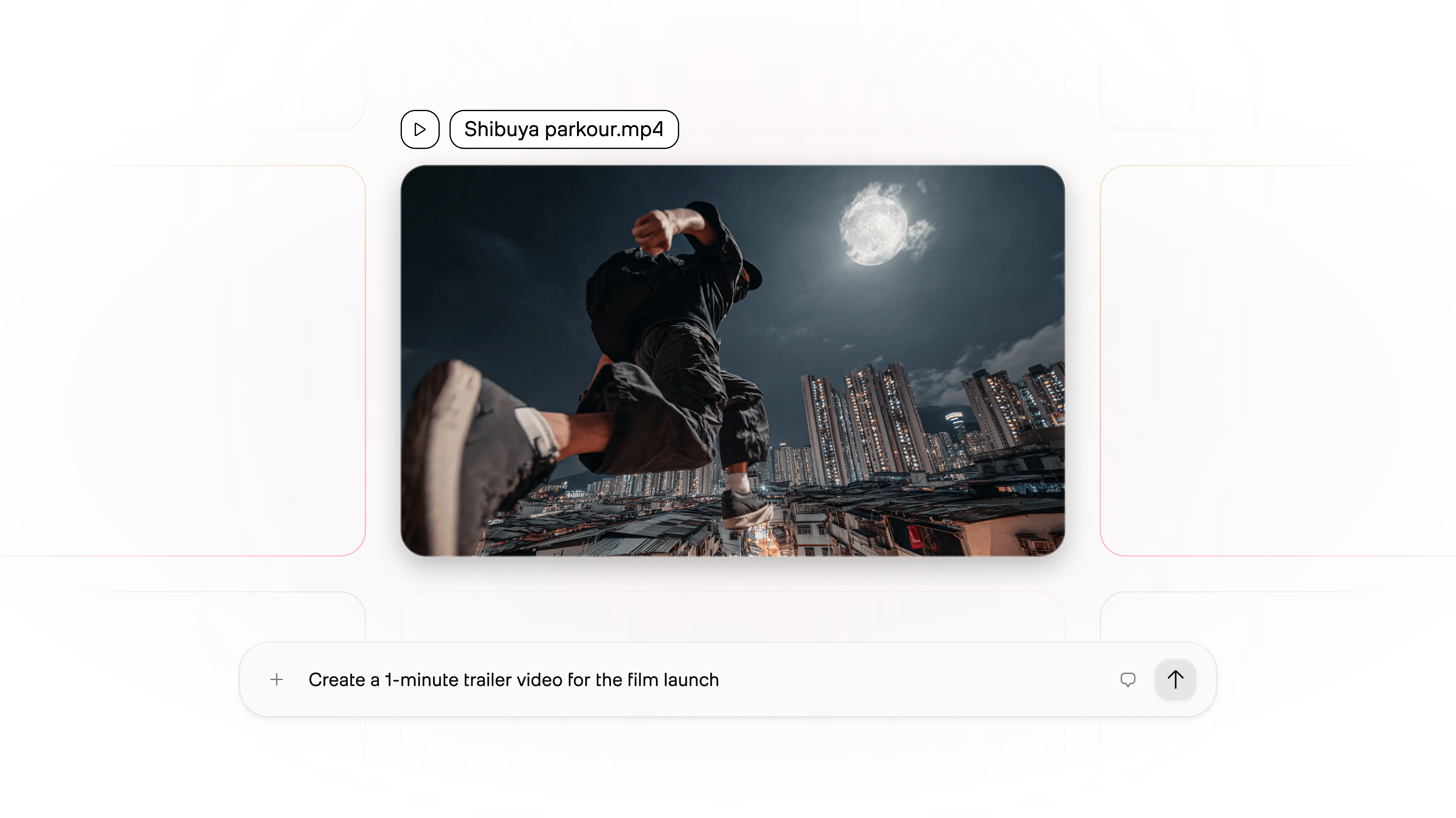
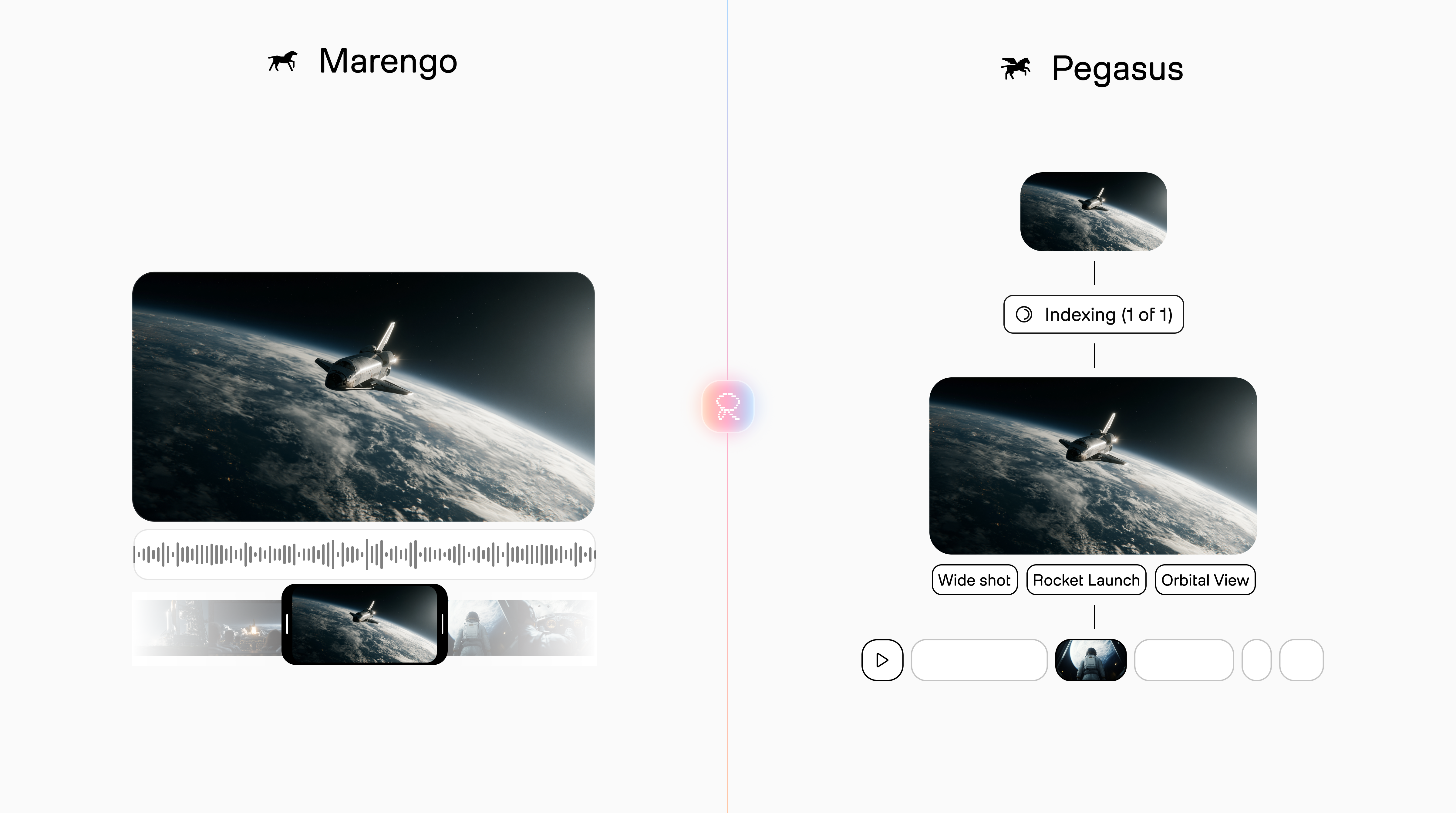
Rodeo does not generate footage. It reads what you shot. The model layer underneath — Marengo as the index, Pegasus as the reasoner — looks at the actual frames, the actual audio, the actual temporal flow of your material, and returns clips that match your description, then creates them with editorial logic. There is no synthesized person. No fabricated location. No likeness pulled from a training set. No content that didn't happen.
This puts Rodeo on the other side of the line from the generation tools. The risk profile is different, the creative posture is different, the IP story is different, the relationship to the work is different. A creator using a generative model is producing things that have never existed. A creator using Rodeo is producing things from material they themselves made exist. The first is a fabrication problem. The second is a retrieval problem — and the right tool for it is a video search tool that understands footage visually, not just by transcript. One is the future of synthetic media. The other is the future of real storytelling.
It is also worth saying what Rodeo is not. It is not a finishing tool; the canvas hands off cleanly to whatever you cut in. It is not a way to direct without a camera; you still have to have shot the thing. It is not a silence-removal product or a multicam-sync tool, though it lives near both. It is the comprehension layer underneath all of that — the part that makes your library readable for the first time, and makes the act of creating a cut something other than the act of remembering what you have.
The camera is not obsolete
The fear about AI in video has been that it would produce undifferentiated, anonymous output. That fear is correct about a specific kind of AI. It is exactly wrong about the kind that reads your archive instead of replacing it. Output created from your own footage is more personal than what you could have edited by hand, not less, because the comprehension layer can hold the entire library in its head at once and you can't.
The most serious work of this next era will be made by people who shot things on purpose: documentary filmmakers with 20 years of interviews, video essayists with their own archives of source material, brand-of-one creators whose channel is itself the catalog, or narrative filmmakers who can finally find the take they almost forgot they shot. The labor floor for remix and creation has collapsed. The labor floor for having something to say has not — and that is the only floor that ever mattered.
The camera is not obsolete. The cameras you have been carrying around for the last decade just became a database. Keep shooting.
Real Footage Wins
AI video has quietly split in two. The filmmakers and creators who actually have something to say were always going to be on the side that finds footage, not the side that fakes it.
The second bet
There are two bets being made in AI video right now.
The first is generation. Models that conjure footage from a text prompt: a hospital corridor, a galloping horse, an unnamed CEO smiling at an unnamed camera. The press cycle has been about this side for two years, and the capital has been on this side for longer. The implicit promise is that you no longer need to shoot anything; you can describe it instead.
The second is comprehension. Models that read the footage you already have — the interviews you sat through, the b-roll you carried back from a three-month shoot, the unedited concert tape, the family camcorder pulls from 2007. These models don't make anything new. They make the thing you already shot findable, composable, and finally usable.
Almost everyone who has ever pressed record on something they cared about is on the second bet. They just didn't know there was a second bet.
Today, Rodeo is generally available. Built on TwelveLabs' multimodal video understanding model, Rodeo is the video intelligence platform for storytellers who need to work with what they shot, not synthesize what they didn't.
Generation can't tell your story
A generative model can render a hospital corridor. It cannot render *the* corridor your protagonist actually walked down in episode three. It can produce a perfectly plausible CEO mid-speech. It cannot produce the customer who actually said the thing that made your documentary work.
This sounds obvious when you say it directly. It is somehow not obvious in the way most of the field has been pitched. The default assumption inside the generation conversation is that the source-material problem is solved — that fidelity will keep improving and eventually it won't matter where the footage came from. That assumption is wrong about what makes video resonate, and it has been wrong since the first uncanny-valley flop in cinema. The uncanny valley isn't a visual problem. It's an ontological one. Audiences can feel when something didn't happen.
This is why a shaky iPhone clip of your kid's first steps is worth rewatching a hundred times and a perfectly rendered three-second AI clip of "a child taking first steps" isn't worth watching once. Production value is not the variable. Reality is the variable. A documentary made from generated footage is not a documentary. A brand story narrated by a synthesized customer is not a customer story. A video essay created from fabricated film clips is, by definition, about nothing.
The serious storytellers, such as the documentarians, the video essayists, the narrative filmmakers, and the brand-of-one creators whose footage is the product, have known this from the start. They have mostly watched the generation conversation from the sidelines, waiting for it to turn into something they could actually use, and quietly suspected it never would.
The hard drive is the moat
The unedited footage on your drives is the most defensible asset you have.
Think about what is actually on a working filmmaker's ten-terabyte external. 3 years of original interviews. 8 projects' worth of b-roll. Several hundred hours of material from a series that ran 2 seasons and could run a third. Camera tests, behind-the-scenes, alternate takes, abandoned cuts, location captures from cities you visited once. Some of it is documented, most of it isn't. Video metadata automation changes that: instead of relying on what you remembered to log, Rodeo indexes by what is actually in the frame, making the entire archive queryable from day one. None of it can be reproduced by anyone, because none of it is in any model's training set, and none of it can be summoned by a prompt. It is yours, specifically and irreducibly, because you went somewhere with a camera and pressed record.
A generative model gives every prompter on Earth the same hospital corridor. Your hard drive gives you one that exists nowhere else — the specific corridor you saw. As rendered footage becomes a commodity, original footage is what retains scarcity and specificity. The hard drive is the moat. Most creators don't think of it that way because they can't see inside it. The footage is the asset; retrieval is the bottleneck. The question of how to find clips in video without scrubbing every file manually is the constraint that determines whether the footage on your drives ever becomes anything.
What changes when the retrieval problem goes away is concrete, not abstract. A video essayist sitting on 60 hours of source material across 20 episodes of a show can use AI video search to find "every moment where the main character lies and immediately looks away" and get the clips ranked, without ever having watched the show. A documentary editor with 3 hours of interviews per subject can ask for "moments where the interviewee contradicts themselves about money" and have a stringout in minutes. For production companies and post houses, AI video analysis scales the same capability across every client library — not just one filmmaker's archive. A solo creator with 3 years of YouTube footage can rebuild a campaign from material they already shot, in a single afternoon, on a brief written that morning. None of this existed in any form a year ago. All of it is the unfair advantage of having original material that can finally be read.
Comprehension, not conjuring
It is worth being clean about what Rodeo is and isn't, because the AI video field has confused this badly.
Rodeo does not generate footage. It reads what you shot. The model layer underneath — Marengo as the index, Pegasus as the reasoner — looks at the actual frames, the actual audio, the actual temporal flow of your material, and returns clips that match your description, then creates them with editorial logic. There is no synthesized person. No fabricated location. No likeness pulled from a training set. No content that didn't happen.
This puts Rodeo on the other side of the line from the generation tools. The risk profile is different, the creative posture is different, the IP story is different, the relationship to the work is different. A creator using a generative model is producing things that have never existed. A creator using Rodeo is producing things from material they themselves made exist. The first is a fabrication problem. The second is a retrieval problem — and the right tool for it is a video search tool that understands footage visually, not just by transcript. One is the future of synthetic media. The other is the future of real storytelling.
It is also worth saying what Rodeo is not. It is not a finishing tool; the canvas hands off cleanly to whatever you cut in. It is not a way to direct without a camera; you still have to have shot the thing. It is not a silence-removal product or a multicam-sync tool, though it lives near both. It is the comprehension layer underneath all of that — the part that makes your library readable for the first time, and makes the act of creating a cut something other than the act of remembering what you have.
The camera is not obsolete
The fear about AI in video has been that it would produce undifferentiated, anonymous output. That fear is correct about a specific kind of AI. It is exactly wrong about the kind that reads your archive instead of replacing it. Output created from your own footage is more personal than what you could have edited by hand, not less, because the comprehension layer can hold the entire library in its head at once and you can't.
The most serious work of this next era will be made by people who shot things on purpose: documentary filmmakers with 20 years of interviews, video essayists with their own archives of source material, brand-of-one creators whose channel is itself the catalog, or narrative filmmakers who can finally find the take they almost forgot they shot. The labor floor for remix and creation has collapsed. The labor floor for having something to say has not — and that is the only floor that ever mattered.
The camera is not obsolete. The cameras you have been carrying around for the last decade just became a database. Keep shooting.